
Environment
Environmental Policy
Basic approach
The Company established the following Environmental Policy and strives to conduct production activities as the most environmentally-friendly steelmaker.
Aichi Steel Environmental Policy
The Company consumes substantial amounts of energy and resources in its business operations and is deeply involved in the global environment, and consequently, strives to conduct environmentally-friendly production activities.
With a full awareness of this and taking into consideration plant location conditions and other factors, the Company will contribute to environmental conservation in every stage of its business operations (including overseas and consolidated subsidiaries) to build even stronger relationships of trust and co-existence with local communities.
To do this, the Company established the basic policy set forth below based on the Aichi Steel Environmental Charter.
Basic Policy
- We will establish environmental management systems and, in cooperation with the relevant departments, undertake environmental conservation measures such as preventing pollution.
- In all our business activities and services, we will comply with environmental laws, regulations, and agreements with governmental bodies, conduct voluntary management and audits, work to enhance management quality, and seek continuous improvement.
- Environmental conservation measures will include proactive pollution prevention and environmental contribution based on source control measures in order to contribute to global environmental conservation while also responding to environmental risks relating to water (water quality, etc.), air, soil, and groundwater associated with our business activities as well as promoting energy conservation and recycling.
- We will actively engage in support and cooperative measures for environmental conservation, including greening throughout society and in local communities as well as urban beautification programs.
- We will conduct training and public relations activities to raise employee awareness of environmental conservation.
- We will comply with environmental laws and regulations applicable to products and the requirements of customers.
- When conducting activities, we will set environmental objectives and targets and periodically review them.
- We will publicly announce the Environmental Policy upon request.
April 1, 2026
Kazuma Kihara
Chief Environmental Management System Officer
Climate Change Initiatives
Basic approach
Aichi Steel emits CO2 both directly and indirectly through the manufacturing processes of its various products, such as heating of steel materials, and melting of steel scrap, which is the raw material of its main product, specialty steel. For this reason, our response to climate change is a serious management issue from the perspectives of risks and opportunities. We are accelerating our efforts to decarbonize with the goal of achieving carbon neutrality as early as 2050. As a resource circulation-based company that uses steel scrap as a raw material in manufacturing, we will utilize our strengths, which have contributed to sustainable manufacturing through materials and parts, to help realize a decarbonized society. To this end, we will also continue to develop and provide products and services that contribute to reduced CO2 emissions across the entire supply chain.
Endorsement of TCFD recommendations and information disclosure
In 2021, we declared our support for the recommendations of the TCFD (Task Force on Climate-related Financial Disclosures.)We have been analyzing various scenarios based on the impacts, and associated risks and opportunities, that climate change may have on our business, and have considered how to reflect the results in management strategy to achieve sustainable growth. We detail our climate-related initiatives here in line with the framework (governance, strategy, risk management, and metrics and targets) recommended by the TCFD.
From FY2024, we established a Sustainability Promotion Department within the Corporate Planning Division to plan and drive company-wide responses to sustainability issues. The department is raising the level of various climate-related initiatives (expanding adoption of renewable energy, acquiring EPDs (Environmental Product Declarations), exploring steel production using non-fossil fuel certificates, utilizing hydrogen gas combustion etc.)
Governance
We have identified climate change as a priority issue (materiality) for management, and are setting KPIs and working to accomplish our targets. As the organization responsible for considering important business management-related matters, the Top Management Meeting and the Environmental Working Group discuss and consider response policies, business strategies, and the status of initiatives related to risks and opportunities that can severely impact business management, such as climate change. The Board of Directors performs its supervisory function by receiving subsequent reports and considering matters that are particularly important.
Organization chart

| Body | Chairperson | Frequency | Roles relating to sustainability measures |
|---|---|---|---|
| Board of Directors | Chairman | At least once per month | Supervision of operational business execution and deliberation on key matters |
| Top Management Meeting | President | Twice per month | Discussion and deliberation on policies, strategies, and implementation status |
| Environmental Working Group | President | Twice per year | Implementation of strategies, target setting, and progress management relating to climate change and natural capital |
Main agenda items in FY2025
| Meetings | Main agenda items |
|---|---|
| Board of Directors |
|
| Top Management Meeting |
|
| Environmental Working Group |
|
Risk management
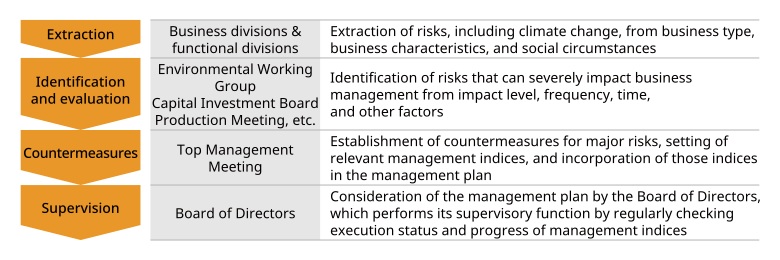
We follow the process indicated below to identify, evaluate, and supervise all risk management. We also discuss and report climate change-related risks in the Environmental Working Group and Top Management Meeting to clarify impacts and our responses.
Risk management process
Strategy
While referencing reports of the International Energy Agency (IEA) and the Intergovernmental Panel on Climate Change (IPCC), we developed two scenarios (1.5°C scenario and 4°C scenario) of what society would look like in 2030 assuming a global average temperature rise of 1.5°C and 4°C by the end of this century (compared to pre-industrial levels), and analyzed the risks and opportunities.
Analysis results by scenario
| Scenarios | Analysis results | Our response to scenario |
|---|---|---|
| 1.5°C |
|
|
| 4°C |
|
|
Main risks and opportunities, and response policies (excerpt)
| Scenarios | Climate-related matters | Impact on Aichi Steel | Response policies | |
|---|---|---|---|---|
| 1.5°C | Major transition in the automotive industry
|
 Medium |
|
|
 High |
|
|
||
| Increased demand for decarbonization in society · Demand for electric furnace steel, etc. |
Medium |
|
|
|
Adoption of carbon pricing
|
High |
|
|
|
| Restricted supply of raw materials and other resources |
Medium |
|
|
|
| 4°C | Natural disasters
|
Medium |
|
|
- [Definition of impact]
- High: Risks/opportunities with the potential to impact revenue by billions of yen or more
- Medium: Risks/opportunities with the potential to impact revenue by hundreds of millions of yen
- Based on current company assumptions. Subject to change in the future.
Indicators and targets
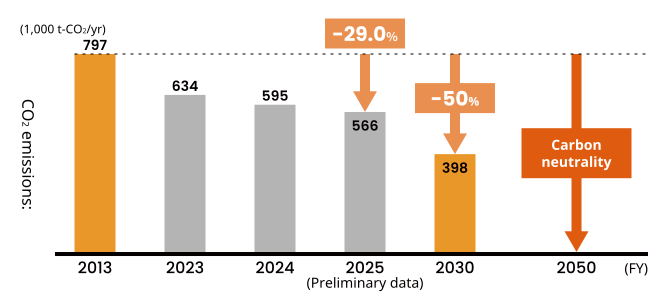
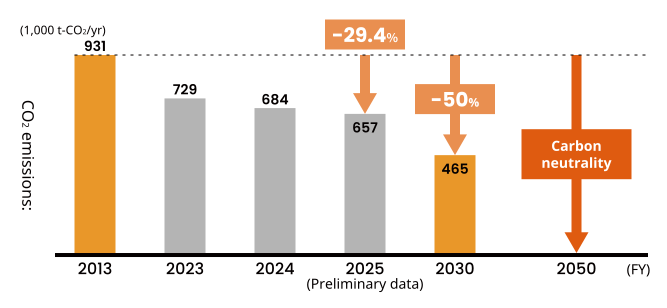
We are contributing to the realization of a decarbonized society, with the goal of reducing CO2 emissions from our business operations by 50% by FY2030 compared to FY2013 levels, and achieving carbon neutrality by FY2050. As well as promoting technological development in production processes and implementing energy-saving activities with full employee participation, we are taking active steps to reduce CO2 emissions, such as introducing more solar power generation and other renewable energy sources. In FY2025, we achieved steady results, with a 29.0% reduction (preliminary data) compared with FY2013 on a non-consolidated basis and a 29.4% reduction (preliminary data) on a consolidated basis.
Non-consolidated
Consolidated
Roadmap to carbon neutrality by 2050
We have formulated and are systematically implementing a roadmap for achieving our targets. We have also detailed plant-specific roadmaps, and we are systematically conducting activities focused on (1) deepening and pursuing energy savings, (2) utilizing renewable energy, and (3) developing and adopting decarbonization technologies. In FY2024, we drew up a roadmap for our group's eight domestic subsidiaries to reduce GHG emissions. Going forward, we will engage in GHG reduction activities in our group, both domestically and internationally.

Specific initiatives
Utilizing renewable energy and low-carbon hydrogen gas
The large amounts of electricity used in Aichi Steel's specialty steel manufacturing processes have made it essential to shift to electricity derived from renewable energy. Therefore, in addition to thorough efforts to conserve energy and improve efficiency, we are actively promoting adoption of such electricity. In June 2025, Higashiura Plant launched operation of solar power generation using on-site PPA, which is expected to reduce annual CO2 emissions by more than 700 tons at our three plants (Higashiura, Seki, and Gifu). In July 2025, we began procuring renewable energy through off-site PPAs. By April 2026, we expect to reduce CO2 emissions by approximately 80 thousand tons per year. Our plan is to continue to expand stably procurable renewable energy sources from a long-term perspective.
In addition to electricity, we will also use hydrogen gas supplied by a hydrogen production unit scheduled for installation at the Chita Plant by around 2030 with the objective of putting hydrogen gas combustion into practical use in some steelmaking reheating furnaces.
This initiative is being undertaken by three companies—Toyota Tsusho Corporation, Eurus Energy Holdings Corporation, and Iwatani Corporation—with the aim of commencing an on-site model business in which low-carbon hydrogen is produced and supplied using renewable energy-derived electricity.
Through this initiative, we expect the use of hydrogen gas combustion in some steelmaking reheating furnaces will reduce CO2 emissions by approximately 10,000 tons per year at the Chita Plant, making this a significant step toward achieving carbon neutrality.
Going forward, we will continue collaborating with the Central Japan Hydrogen and Ammonia Association with the goal of expanding the use of hydrogen gas to other plants.

CO2 emissions by scope
[Scope 1, 2]
| CO2 emissions (1,000 t-CO2) | |||||
|---|---|---|---|---|---|
| FY2013 | FY2023 | FY2024 | FY2025 | ||
| Non-consolidated | Scope 1, Scope 2 | 257, 540 | 224, 410 | 223, 372 | 246, 320 |
| Total amount | 797 | 634 | 595 | 566 | |
| Affiliated companies | Scope1, Scope2 | 23, 110 | 23, 72 | 22, 67 | 21, 70 |
| Total amount | 133 | 95 | 89 | 91 | |
| Consolidated total | 931 | 729 | 684 | 657 | |
- Calculation method:
- Calculated based on “Standard Calorific Values and Carbon Emission Factors for Energy Resources” (Agency for Natural Resources and Energy) under the Act on Promotion of Global Warming Countermeasures (MOE), and the annual emission factors of contracted electricity providers
[Scope 3] *Non-consolidated
* Third-party verification item
| Category | CO2 emissions (1,000 t-CO2) | Calculation methods | |||
|---|---|---|---|---|---|
| FY2021 | FY2023 | FY2024 | FY2025 (Preliminary data) |
||
| 1. Purchased products and services | 1,162 | 901 | 845* | 799 | Calculated by multiplying purchased quantities (weight or monetary value) of raw materials and supplies by emission intensity |
| 2. Capital assets | 30 | 50 | 46 | 29 | Calculated by multiplying capital expenditure by emission intensity |
| 3. Fuel and energy related activities not included in Scope 1 and 2 | 131 | 122 | 120* | 121 | Calculated by multiplying consumption of purchased electricity and fuel by their emission intensities |
| 4. Transportation and distribution (upstream) | 44 | 36 | 37 | 38 | Calculated by multiplying transportation distance reported under the Energy Conservation Act, and transportation mode and distance of Category 1 purchased goods, by emission intensity |
| 5. Waste from operations | 9 | 9 | 9* | 8 | Calculated by multiplying waste amount by emission intensity |
| 6. Business travel | 0 | 0 | 0 | 0 | Calculated by multiplying the payment amount by mode of transportation by emission intensity |
| 7. Employee commuting | 3 | 3 | 3 | 3 | Calculated by multiplying reimbursement amount by mode of transportation by emission intensity |
| 8. Leased assets (upstream) | 0 | 0 | 0 | 0 | Calculated by multiplying energy consumption of leased assets by emission intensity |
| 9. Transportation and distribution (downstream) | – | – | – | – | Excluded - unspecified |
| 10. Machining of sold products | 420 | 356 | 327 | 360 | Related to machining of intermediate products. Calculated by multiplying sales volume by emission intensity |
| 11. Use of sold products | – | – | – | – | Excluded - products do not emit CO2 directly during use |
| 12. Disposal of sold products | 10 | 9 | 9 | 9 | Calculated by multiplying weight of waste and recyclable products by emission intensity |
| 13. Leased assets (downstream) | 0 | 0 | 0 | 0 | Calculated by multiplying energy consumption of leased assets rented to other companies by emission intensity |
| 14. Franchises | 0 | 0 | 0 | 0 | No franchisees |
| 15. Investments | – | – | – | – | Excluded from calculation - not an investment company |
| Total | 1,809 | 1,486 | 1,396 | 1,367 | |
- Figures in the above table are rounded to the nearest thousand tons, and 0 means less than 500 tons.
- Emission intensity:
- “Emission Intensity Database for Calculating Greenhouse Gas Emissions of Organizations Throughout the Supply Chain (Ver. 3.5))” (April 2025, MOE) and “LCI Database IDEA version 3.5”
(Advanced LCA Research Group, Research Institute of Science for Safety and Sustainability, National Institute of Advanced Industrial Science and Technology(AIST))
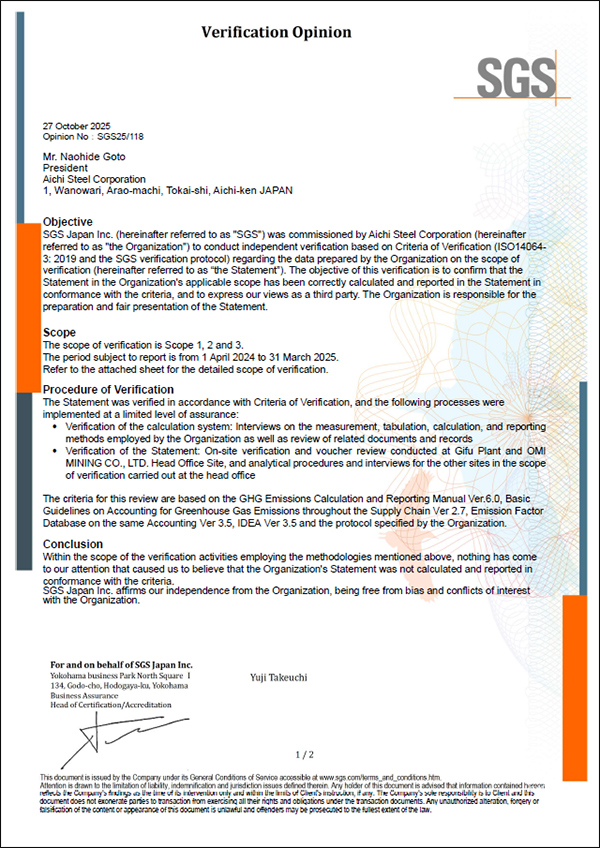
We have undergone independent third-party verification by SGS Japan Inc. to improve the reliability of our greenhouse gas emissions.
https://www.aichi-steel.co.jp/sustainability/esg/verification@en.pdf
Collaboration with society
To help drive social change and achieve carbon neutrality by 2050, we are participating in various initiatives and obtaining relevant certifications. Through these activities, we seek to expand the use of products and services that contribute to decarbonization, and to maintain and strengthen competitiveness in the specialty steel industry in Japan.
Acquisition of SuMPO EPD label
In April 2025, we acquired SuMPO EPD environmental product certification for our specialty steel bars and formed stainless steel products. An EPD is a certification system that objectively evaluates and reports the environmental impact of products, providing quantitative environmental information on the entire product life cycle, from resource extraction, manufacturing, and distribution to use and disposal or recycling. Obtaining this certification will enable us to disclose objective and transparent environmental information, supporting our customers' efforts to address environmental issues.
Special Steel Bar JR-AW-24069E
Stainless Steel Shapes JR-BO-24013E

Start of hydrogen combustion verification trials at Kariya Plant
In July 2024, we started hydrogen combustion technology verification trials at Kariya Plant as part of our efforts to carbon neutrality. In cooperation with Toho Gas Group and others, we modified our steel heat treatment furnace equipment that uses city gas to be compatible with hydrogen combustion. With the objective of developing heating and heat treatment technologies for steel materials in a hydrogen gas environment, we will use the knowledge gained for practical application of hydrogen gas combustion in some steelmaking reheating furnaces at the Chita Plant starting in 2030.


Basic agreement on hydrogen utilization signed with the Central Japan Hydrogen and Ammonia Association
In October 2024, we signed a basic agreement to work toward carbon neutrality with the Central Japan Hydrogen and Ammonia Association, established by Aichi Prefecture, and 20 supporting companies. The aim is to establish a nationwide, pioneering large-scale hydrogen and ammonia supply chain, to be promoted regionally through public-private partnerships. By advancing the use of clean energy, including hydrogen, we will help realize a sustainable global environment.
For more information about the Central Japan Hydrogen and Ammonia Association, please visit

Participation in the Aichi Environmental Innovation Consortium
In January 2025, we joined the Aichi Environmental Innovation Consortium, which is made up of 51 organizations including companies, universities, financial institutions, and government agencies. Based in Aichi, the consortium aims to create and implement environmental innovations to tackle challenges such as achieving carbon neutrality, transitioning to a circular economy, and realizing nature-positive outcomes. Aiming to achieve carbon neutrality as early as 2050, we will apply our knowledge gained from energy-saving activities, technology development, renewable energy use, and biodiversity conservation to help build a sustainable society.
For more information about the Aichi Environmental Innovation Consortium, please visit

Environmental Management
Basic approach
To fulfill the Vision 2030 management mission of contributing to society as the “most environmentally friendly steelmaker,” Aichi Steel defined targets to be achieved by 2030, and we are currently working with a focus on the three pillars: eco-energy, eco-production, and eco-management.
| Initiatives | Targets for 2030 | |
|---|---|---|
| Eco-energy |
|
CO2 emissions: 50% reduction (compared to FY2013) |
| Eco-production |
|
Amount of landfill waste: 2,000 t/year or less |
| Eco-management |
|
Nakashinden environmental indicator species: 30 species attracted |
Promotion structure
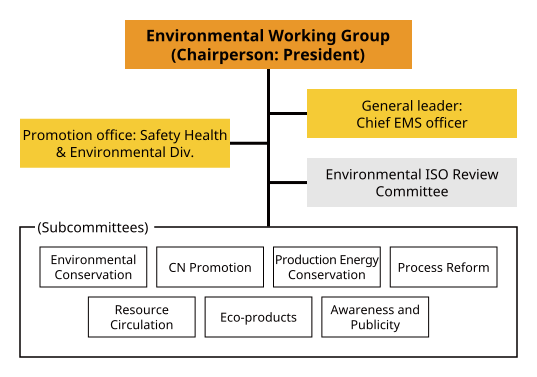
Aichi Steel is working to implement environmental management through effective employment of the PDCA cycle mainly through the Environmental Working Group, which operates under the supervision of its Board of Directors with the president as chairperson. The Environmental Working Group is in charge of executing strategy, establishing targets, and checking progress in accordance with company policies and the Aichi Environmental Action Plan. Seven subcommittees have been established under the Environmental Working Group with clear areas of responsibility to promote efficient and targeted activities based on specialized perspectives. In addition, the Aichi Steel Group Environmental Committee was established to share information and successful case studies to promote Groupwide activities.
Organization chart
| Subcommittees | Initiatives |
|---|---|
| Environmental Conservation |
|
| CN Promotion |
|
| Production Energy Conservation |
|
| Process Reform |
|
| Resource Circulation |
|
| Eco-products |
|
| Awareness and Publicity |
|
Eco-energy
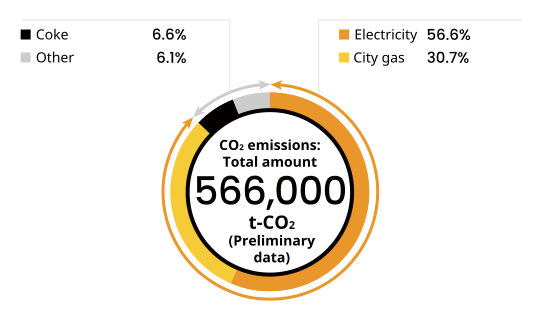
Approximately 90% of our CO2 emissions come from electricity and city gas used to melt steel scrap and heat steel materials. Based on the roadmap formulated toward achieving carbon neutrality by 2050, we are promoting the reduction of energy consumption through efforts to deepen the energy-saving technologies that we have cultivated, the elimination of waste in our daily operations, and drastic improvements in manufacturing processes. In FY2024, we conducted 129 energy-saving activities.
In addition, we introduced renewable energy, including solar power generation through on-site PPAs at the Seki Plant and Gifu Plant and installed a solar power generation facility at the Higashiura Plant in June 2025.
We also began introducing renewable energy through off-site PPAs in July 2025 and further expanded this initiative in April 2026.
Going forward, we will systematically expand the introduction of renewable energy including onshore wind power.
Breakdown of CO2 emissions in FY2025 (Preliminary data)
(Scope 1 + Scope 2 emissions from Aichi Steel on non-consolidated basis)
Resource Circulation
Eco-production
Aichi Steel is a resource circulation-based company that both recirculates steel resources and achieves economic value, by recycling steel scrap generated from the dismantling of automobiles and infrastructure into high-quality specialty steel products, automotive components, and other products. We aim to transition to a circular economy by further accelerating our efforts to reuse products and parts and recycle waste and raw materials while reducing resource input and consumption through the efficient use of resources and energy.

Efforts to increase by-product recycling rates
We have strengthened our recycling of by-products that were previously sent to landfills, maintaining a recycling rate in the upper 90% range. Slag generated in electric furnaces is primarily used as roadbed material for roads, while electric furnace dust is sent to recycling companies for processing to recover valuable metals. Additionally, waste brick used in steelmaking and refining is sorted and crushed, then reused as slag-forming material in electric furnaces. At present, we are focusing on developing technology to recycle slag-based by-products, which are difficult to process, as slag-forming material, with the aim of reducing the amount of landfill to 2,000 tons by 2030 and zero by 2050.
Trends in byproducts sent to landfill and byproduct recycling rate

Amount of industrial waste discharged from products using plastic

Initiatives for a circular economy
We are a member of Circular Core, an association for promoting the sound development of a circular economy, creating new value, and advancing sustainable manufacturing that is environmentally friendly, through collaboration across automotive materials, components, and the entire supply chain. The association actively conducts market research on the circular economy covering automotive materials, components, and the entire supply chain, researches, develops hypothesis and validates the latest technological trends and business practices, and engages in exchanges and cooperation with relevant domestic and international organizations.
Biodiversity
Eco-management
As a resource circulation-based company, we carry out manufacturing that achieves both the circulation of iron resources and economic value. In our business activities, we constantly benefit from the gifts of biodiversity, including natural resources and water. On the other hand, our CO2 emissions and wastewater from melting scrap and heating steel materials impact biodiversity.
We are deeply aware of the importance of biodiversity, which is being continuously lost. Based on the following policies, we contribute to a sustainable society by conserving biodiversity and developing businesses that protect and utilize nature.
Aichi Steel Group's Biodiversity Policy
1. Protection and restoration of ecosystem
- We assess the impact of our business activities on nature and take appropriate protective measures.
- We explore environmental conservation measures that take advantage of nature’s gifts in order to minimize our impact.
- We contribute to the restoration of nature by leveraging our proprietary technologies derived from our special steel manufacturing expertise.
2. Sustainable use
- We promote sustainable methods and use in the areas of “climate change, water, and resources,” which impact nature.
3. Collaboration with local communities
- We work together with local communities to conserve and restore biodiversity and guide nature toward regeneration.
Through these efforts, we are contributing to achieving a “world in harmony with nature (nature positive)” by 2050.
Biodiversity conservation initiatives
We endorse the Biodiversity Declaration and Action Guidelines of the Japan Business Federation (Keidanren) and are engaged in conservation activities. We also contribute to the revitalization of nature as a participant in the 30 by 30 Alliance, established by government agencies, companies, and NPOs.
Since FY2012, we have been promoting the Forest Habitat Creation for Beetles project in the Nakashinden Greenbelt adjacent to Chita Plant, maintaining an environment that attracts 50 indicator species. The site, which forms part of Chita Peninsular Greenbelt, a collaboration among 11 organizations including Aichi Steel and other companies, government agencies, students, experts, and NPOs, was certified in FY2023 by the Ministry of the Environment as a Nature Symbiosis Site.
In 2024, we planted 6,000 trees while zoning*, and hosted a tree-planting ceremony attended by the Mayor of Tokai. In November, we were recognized as an Aichi Biodiversity Excellence Certified Company. Furthermore, we have been conducting forest cultivation activities in Nagano Prefecture since 2006, and in 2019, we signed a Forest Adoption Agreement with Otaki Village, the water source for our business operations. Employees and their families regularly engage in conservation activities, working together with the local community to nurture a richer forest.
- The process of determining optimal plant placement


Disclosures based on the TNFD (Taskforce on Nature-related Financial Disclosures)
Based on the LEAP approach disclosure method recommended by the Taskforce on Nature-related Financial Disclosures (TNFD), we identified natural capital that the Group's direct operations across all sites depend on and impact and assessed risks and opportunities.
1. Governance
(1) Sustainability promotion structure
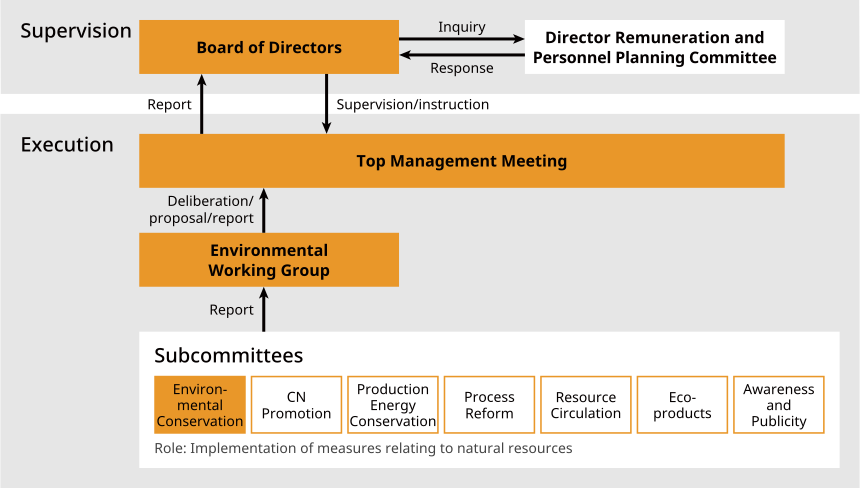
Our sustainability strategies, which include natural capital such as climate change and resource circulation, are promoted primarily by the Environmental Working Group chaired by the president. Progress is managed based on reports from subcommittees, and the details of proposals are reported to the Board of Directors via the Top Management Meeting, which deliberates on and supervises key matters.
Promotion structure
| Body | Chairperson | Frequency | Roles relating to sustainability measures |
|---|---|---|---|
| Board of Directors | Chairman | At least once per month | Supervision of operational business execution and deliberation on key matters |
| Top Management Meeting | President | Twice per month | Discussion and deliberation on policies, strategies, and implementation status |
| Environmental Working Group | President | Twice per year | Implementation of strategies, target setting, and progress management relating to climate change and natural capital |
(2) Human rights policies regarding stakeholders and engagement activities
The Group prioritizes cooperation with stakeholders and local communities through measures that address natural capital. The Group formulated the Aichi Steel Group Human Rights Policy based on the United Nations Guiding Principles on Business and Human Rights (UNGP) and engages with suppliers based on the Supplier Sustainability Guidelines. We continuously seek opinions from local residents through means such as roundtable discussions, plant tours, and inquiry desks.
See the following link for our Human Rights Policy.
2. Strategy
(1) Understanding dependency and impact items and their assessments
To discover natural capital contact points in the Group’s business activities, we identified dependencies and impacts on nature in our direct operations and confirmed their extent. We employed the ENCORE analytical tool*1 to identify dependencies and impacts on natural capital for each business activity category and assessed them.
- ENCORE (Exploring Natural Capital Opportunities, Risks and Exposure) is an analytical tool for assessing dependencies and impact on natural capital for individual business activity categories at business sites.
Dependency and impact assessment results
| Business activity | Dependencies | Impacts | ||||||||||||||||||||||||
|---|---|---|---|---|---|---|---|---|---|---|---|---|---|---|---|---|---|---|---|---|---|---|---|---|---|---|
| Regulating and maintenance services | Inputs | Outputs | ||||||||||||||||||||||||
| Water supply | Other provisioning services – animal-based energy | Global climate regulation | Rainfall pattern regulation | Local climate regulation | Air filtration | Soil and sediment retention | Solid waste remediation | Water purification | Water flow regulation | Flood mitigation | Storm mitigation | Noise attenuation | Biological control | Dilution by atmosphere and ecosystems | Mediation of sensory impacts (other than noise) | Area of land use | Area of freshwater use | Volume of water use | GHG emissions | Non-GHG air pollutants | Emissions of toxic pollutants to water and soil | Emissions of nutrient pollutants to water and soil | Solid waste | Disturbances | Introduction of invasive species | |
| Steel-making business | H | VL | M | L | VL | L | L | M | H | M | M | VL | VL | L | M | H | H | VH | M | VH | ||||||
| Forged products and automobile parts manufacturing business | M | VL | L | M | M | M | M | M | M | VL | L | VL | L | M | L | L | VH | L | M | |||||||
| Lime and refractory products manufacturing business | M | VL | L | L | VL | L | M | M | M | M | M | VL | L | VL | L | M | M | H | H | VH | M | M | M | |||
| Warehousing and transportation business | VL | M | M | M | L | VL | M | L | M | M | VL | VL | VL | M | L | M | L | L | M | L | M | L | ||||
| Office and software development business | VL | VL | VL | L | VL | VL | VL | L | VL | VL | VL | M | L | L | VL | L | VL | M | ||||||||
| Sales | M | VL | VL | L | L | M | L | L | VL | VL | L | M | M | L | L | VL | L | M | ||||||||
- ■ VH: Very high ■ H: High ■ M: Medium ■ L: Low ■ VL: Very low □ None
(2) Identification of risks and opportunities
Based on the results of assessment of material dependencies and impacts on natural capital performed using ENCORE, we identified the risks and opportunities arising from those dependencies and impacts.
List of risks and opportunities
| Risk/opportunity | Category | Summary | Response |
|---|---|---|---|
| Physical risks | Chronic | Decline in revenue due to a suspension of operations in conjunction with water shortages | Effective use of water resources by re-using processed water Development and enhancement of BCP structures |
| Transition risks | Policies and regulations | Increased capital investment due to stricter environmental regulations | Rigorous water discharge management based on voluntary criteria more stringent than regulatory standards |
| Markets/reputation | Decline in corporate value due to adverse impacts on ecosystems (such as pollution) or failure to comply with emissions regulations | ||
| Opportunities | Products and services/markets | Developing products and services with low environmental impact and increasing demand for them increases demand for low-carbon and recyclable products and expands business opportunities | Commercialization of hydrogen gas combustion, development of iron-supplying materials for combatting CG disease and improving alkaline soils, and development of products with low environmental impact |
| Ecosystem protection and restoration | Promoting measures to protect nature enhances the company’s reputation among stakeholders including local residents | Nature protection activities (measures concerning the Chita Peninsular Greenbelt, development of forests for water resources, and bamboo grove maintenance) |
(3) Priority locations
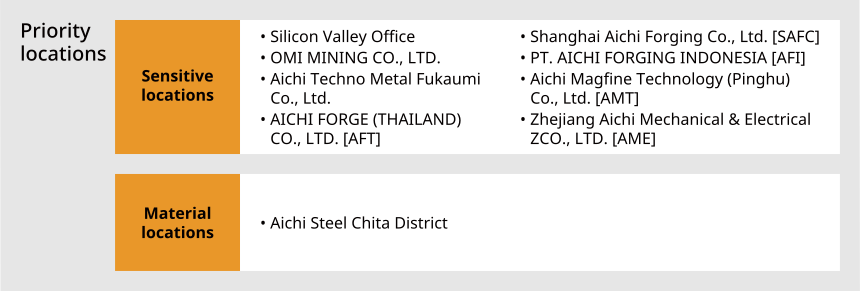
There are two categories of priority locations: sensitive locations,*2 that is, areas considered to be important from the perspective of biodiversity, ecosystems, and water risk; and material locations where dependencies, impacts, risks, and opportunities relating to nature that are material to the organization are present. Following assessment, nine sites were designated as priority locations for the Group.
Among these, taking into account activity levels and past performance, we are focusing on the Aichi Steel Chita District, and for the remaining eight sites, we will continue monitoring and conduct reassessment and take appropriate action as necessary.
Results of priority location identification
- Assessments were performed using the following analytical tools based on siting information for business sites.
Materiality within biodiversity: Assessment of proximity to protected areas and similar sites using the Integrated Biodiversity Assessment Tool (IBAT)
Adequacy of ecosystems: Assessment of regions with rich ecosystems using the Global Biodiversity Model (GLOBIO)
Physical water risks: Assessment of risks including water stress and flooding using the Aqueduct assessment tool and hazard maps
3. Risk and impact management
In accordance with the Crisis Management Rules, the Group has developed risk management systems, preventive measures, and emergency responses. The Chief Risk Officer (CRO) oversees risk management, and each department and Group company identifies and reports on risks. Major risks are evaluated based on the scope of impact and other factors, response measures and management indices are set by the Top Management Meeting, they are reflected in management plans, and monitoring and implementation of countermeasures are continuously performed. The Board of Directors conduct supervision by considering plans and checking execution status.
Risk management process
4. Metrics and targets
The metrics are the global and sector-specific core metrics recommended by the TNFD, and the metric data that can be disclosed at this time are as set forth below. Regarding targets, we will take action with a focus on the Aichi Steel Chita District and work to reduce impacts on nature.
Metrics
| Driver of nature change | Metric no. | Indicator | Scope | 2025 results |
|---|---|---|---|---|
| Land/freshwater/ocean-use change | C1.0 | Site area | Consolidated | 5,706,000 m² |
| C1.1 | Extent of conservation or restoration | Consolidated | The Company's portion of the Chita Peninsular Greenbelt: 1.32 ha | |
| Pollution/pollution removal | C2.1 | Volume of water discharged | Non-consolidated | 2.72 million m³ |
| Volume of pollutants in water discharged | Non-consolidated | COD: 12.27 t; nitrogen: 5.03 t; phosphorous: 0.37 t |
||
| C2.2 | Volume of byproducts sent to landfills | Non-consolidated |
2,100 t |
|
| Recycling rate | Non-consolidated | 98.8% | ||
| C2.4 | Non-GHG air pollutants | Non-consolidated | Currently being calculated (FY2024 NOx: 121 t; SOx: 1.47 t) |
|
| Release and transfer amounts of hazardous substances (PRTR) | Non-consolidated | Currently being calculated (FY2024 release amount: 15.6 t; transfer amount: 7,532 t) |
||
| Resource use/resource replenishment | C3.0 | Water withdrawal from areas of water stress risk*3 | Consolidated | 125,000 m³ |
| C3.1 | Quantity of high-risk commodities (fuel use volume) | Non-consolidated | Fuel: 13,000 kl; city gas: 79 million Nm³ | |
| Risks | C7.2 | Fines, penalties, and litigation action due to negative nature-related impacts | Non-consolidated | None |
- Areas of water stress risks: AFT, SAFC, AFI, AMT, AME
Targets
| Category | Indicator | Scope | Target year | Details |
|---|---|---|---|---|
| Resource use | Effective use of water resources | Chita district | - | Assess water circulation volume and set circulation rate target |
| Volume of byproducts sent to landfills and recycling rates | Non-consolidated | 2030 | Landfill volume: No more than 2,000 t; recycling rate: At least 98% | |
| Pollution removal | Wastewater pollution | Consolidated | 2030 | Zero abnormalities and complaints |
| Air pollution |